For more than 40 years, the use of Polychlorinated Biphenyls (PCBs) dielectric oil has become a prerequisite for safety standards in buildings and buildings that have high risk where the risk of fire and explosion is a major concern. Transformers and capacitors manufactured using PCBs are used in public facilities such as schools and hospitals as well as industrial sites that require optimal protection from equipment fire risks, for example in underground mines, railroad systems and military installations. If the use of PCBs in transformers is so beneficial and can prevent the risk of fire in the equipment, why was the production and use of PCBs finally banned in America and around the world?
BANNING PCBs AND THE TRAGEDY BEHIND IT
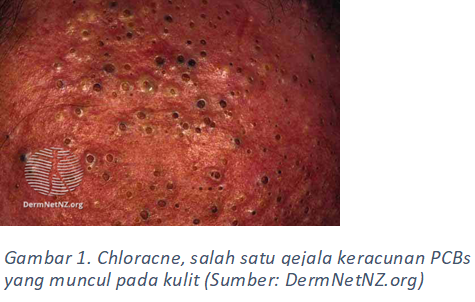
In 1930 the United States Public Health Service began to accommodate complaints from workers, where most of them experienced a fairly massive black pimple, which was later referred to as chloracne. A fairly complete documentation regarding the history of the development of PCBs production and use including controversial health and environmental cases caused by PCBs can be found in publications compiled by Markowitz (2018) and Markowitz and Rosner (2018).
Suspicions about the negative health effects of PCBs were raised even at the start of the mass production period initiated by the Swann Chemical Company. The workers who are directly involved in the production of Aroclors (one of the trademarks/product names of PCBs) experience a skin disease called chloracne, which is blackened bumps on the skin's surface. In 1933, an investigation was carried out involving the expert Dr. Frederick Flinn from Columbia University, USA. The purpose of the investigation is "whether the various chlorinated diphenyls compounds produced or the impurities contained in them may be the cause (causative agent) of skin disease (dermatitis) that afflicts some workers in the factory"? Flinn suspected the skin disease was caused by styrene and therefore workers were required to shower or rinse in case of contact with the material.
In 1944, Public Health Reports published the results of a study of guinea pigs, rabbits and mice exposed to PCBs. The study noted that “two pathological findings were clearly observed, namely liver damage in all experiments and skin changes in animals that received injections or that received direct skin treatment”. Liver damage was also found in animals fed a diet mixed with PCBs over a period of 30 to 90 days.
1955 saw more reports of PCBs users getting sick after exposure to these compounds. One of these cases is the one recorded in the Monsanto archives, namely the one that records the leakage of Aroclors as heat-exchange fluids. In one case “three people suffered liver damage after one week of exposure to PCBs”. However, the case that shocked the world the most was that of the community in Kyushu, western Japan in 1968.
According to Kuratsune (2001), the phenomenon, which was originally known as a “strange disease” afflicts 1,800 Kyushu residents in Fukuoka Prefecture. Several other sources put the total number of victims at 14,000 (Suzuki & Kobayashi, 1968). Meanwhile, the tracking conducted by Onozuka et al (2020) for 50 years from 1968 to 2017 found that officially recorded cases in Japan were only 2,318 people. This difference in numbers is most likely due to different tracking and recording methods. Onozuka et al, for example, used official data recorded at the Ministry of Health, Labor and Welfare in Japan. Although not explicitly explained, the casualty figures written by Kuratsune (2001) and Suzuki and Kobayashi (1968) appear to be derived from field survey data at the outset of the incident.
After an official investigation by the government, this strange disease was later given the name Yusho alias "oil disease". The official investigation concluded that the cause of the disease was the consumption of rice bran oil which had been contaminated by Kanechlor 400, a PCBs product manufactured by Kanegafuchi Chemical Industry Co., Ltd. Yusho's disease is characterized by the appearance of pimple-shaped bumps on the surface of the skin, pigmentation of the skin, inflammation of the eyelids (conjunctivitis), increased eye secretions, and numbness of the limbs (due to nerve damage to the brain).
The tragedy of 1968 sparked tremendous controversy in Japan, so that finally the production and use of PCBs was completely banned in Japan in 1974. However, that does not mean the problem ends there. Exposure to PCBs results in a variety of fatal cancers. A 50-year search and analysis conducted by Onozuka et al (2020) on Yusho patients (1,664 patients) found that the mortality rate in Yusho patients (Standardized Mortality Ratio) increased compared to the mortality rate of Japanese citizens in general. This increase in death rates is fueled by cancer. Death in male patients is triggered by all types of cancer, especially lung cancer. Meanwhile, in female patients, an increased mortality rate was found in patients with liver cancer.
Back in the United States, in 1970 Monsanto reduced and discontinued the sale of PCBs for open applications (paints, sealants, carbon copy paper, etc.) to prevent what they called “uncontrolled environmental pollution”. This is done after the discovery of PCBs in the environment. From 1972 to 1975 Monsanto restricted the sale of PCBs to completely closed applications, until a comparable substitute product (compound) was found. Until finally Monsanto decided to completely stop the production and sale of PCBs in 1977 (Monsanto, nd). However, Monsanto's decision is inseparable from the increasing pressure from the media, environmental activists and policy makers following the confirmation of cases of pollution and health problems from people affected by PCBs (Markowitz & Rosner, 2018).
PCBs DISASTER LEADED TO LAW LAW
The problems did not stop with Monsanto closing the factory and stopping the production of PCBs. Since the early 1970s, documented findings are indisputable concerning PCBs contamination in the Great Lakes, rivers in Alabama, fisheries and dairy production in Ohio, shrimp in the Gulf of Mexico, bird populations along the west coast of America to the Hudson River in New York and many other areas (Markowitz & Rosner, 2018) led to the initiation of lawsuits in various states.
In 2003, the public in the City of Anniston Alabama won a lawsuit amounting to USD 700,000,000 (more than Rp. 10 trillion) for the PCBs contamination that occurred in their city and the health problems suffered by its residents (The Guardian, 2018). In 2020 a Washington Prosecutor demanded Bayer AG (which acquired a Monsanto factory in 2018) pay USD 820 million (more than Rp. 11 trillion) to settle PCBs contamination in several areas (Johnson, 2020). The company even had to pay USD 185,000,000 (equivalent to Rp. 2.7 trillion) to three school teachers in Washington who suffered from brain cancer due to exposure to PCBs in the school building where they had taught (Bloomberg, 2021). General Electric Co. also had to pay at least USD 1,600,000,000 (nearly IDR 23 trillion) (Mann, 2015) to dredge about 3 million cubic meters of Hudson River sediment from 2009 to 2015 (EPA, 2021) as a consequence of dumping 650 tonnes of PCBs in the period 1947 to 1977 (Riverkeeper, 2021). Although General Electric Co. will officially stop dredging activities on the Hudson River, monitoring activities will continue. Since the prohibition of commercial fishing and consumption of Hudson River fish and biota in 1976 (Riverkeeper, 2021), no one can predict when the Hudson River ecosystem and the surrounding area will completely recover and be free of PCBs. To date, the Hudson River is one of the largest natural museums documenting and narrating the environmental and humanitarian disasters caused by PCBs.
If you need PCBs Content Laboratory Testing Services in Transformer Oil according to IEC 61619, please click: here.
REFERENCE
Bloomberg. 2021. https://www.bnnbloomberg.ca/monsanto-ordered-to-pay-teachers-185-million-over-pcb-exposure-1.1633595
Environmental Protection Agency. 2021. https://www.epa.gov/hudsonriverpcbs/hudson-river-cleanup
Johnson, G. 2020. https://www.foodmanufacturing.com/safety/news/21138327/monsanto-will-pay-95m-to-settle-pcb-pollution-case
Kuratsune, M. 2001. Outlines of Yusho. In Yusho: A Human Disaster Caused by PCBs and Related Compounds. M. Kuratsune, H. Yoshimura, Y. Hori, M. Okumura dan Y. Masuda (Ed). Pp. 2 – 6. Kyushu: Kyushu University Press. https://www.kyudai-derm.org/yusho_kenkyu_e/browsing.html
Mann, T. 2015. https://www.wsj.com/articles/ge-nears-end-of-hudson-river-cleanup-1447290049#:~:text=GE%20said%20the%20cost%20was,than%201%20million%20underwater%20plants
Markowitz, G. 2018. From Industrial Toxins to Worldwide Pollutants: A Brief History of Polychlorinated Biphenyls. Public Health Report Vol. 1 (6): 721 – 725. https://journals.sagepub.com/doi/full/10.1177/0033354918801578
Markowitz, G dan D. Rosner. 2018. Monsanto, PCBs and the Creation of “World-Wide Ecological Problem”. Journal of Public Health Policy Vol 39: 463 – 540. https://link.springer.com/article/10.1057/s41271-018-0146-8
Monsanto. nd. https://www.toxicdocs.org/d/KRGjYJ9QzJyw90Z38enjNMBvX?lightbox=1
Onozuka, D., Y. Nakamura, G. Tsuji dan M. Furue. 2020. Mortality in Yusho Patients Exposed to Polychlorinated Biphenyls and Polychlorinated Dibenzofurans: a 50-year Retrospective Cohort Study. Environmental Health 19: 119 – 128. https://ehjournal.biomedcentral.com/articles/10.1186/s12940-020-00680-0
Riverkeeper. 2021. https://www.riverkeeper.org/campaigns/stop-polluters/pcbs/#
Suzuki, T dan H. Kobayashi. 1968. Contamination of Rice Bran Oil with PCB Used as Heating Medium by Leakage through Penetration Holes at the Heating Coil Tube in Deodorization Chamber. http://www.shippai.org/fkd/en/hfen/HB1056031.pdf
The Guardian. 2018. https://www.theguardian.com/artanddesign/2018/apr/20/mathieu-asselin-monsanto-deutsche-borse-anniston-alabama