In various industrial sectors, machine reliability is a key factor in maintaining smooth operations and company productivity. Frequent machine breakdowns not only cause production downtime but also increase maintenance costs, spare part consumption, and potential losses due to work process disruptions. One of the most common causes of machine failure is a suboptimal lubrication system. Many failures in bearings, gears, chains, and rotating equipment components actually stem from simple problems such as over-lubrication, under-lubrication, contamination, or the use of lubricants that do not meet specifications. Therefore, the concept of Precision Lubrication Practices is increasingly gaining importance in modern maintenance.
Precision Lubrication Practices is a lubrication method that is carried out precisely, measured, and controlled to ensure that every machine component receives maximum protection. This concept focuses not only on routine application of oil or grease but also on ensuring that the lubricant used has the appropriate type, viscosity, quantity, and cleanliness level for the machine's needs. With this approach, lubricants are no longer treated as mere consumables but as critical elements that determine machine performance and lifespan.
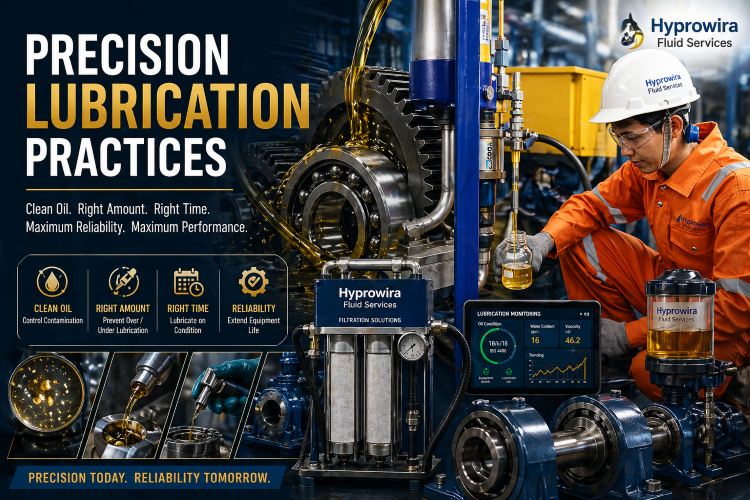
One of the main principles of precision lubrication is "Right Lubricant, Right Place, Right Quantity, Right Time, and Right Condition." This means that every lubrication process must be carried out using the right lubricant, at the right lubrication point, in the right amount, at the right time interval, and with the lubricant kept clean and free from contamination. A small error in any of these aspects can have a significant impact on machine reliability. For example, too much grease in a bearing can cause increased temperatures and seal damage, while too little grease can cause direct metal-to-metal contact and accelerate wear.
Contamination is also a major enemy in the lubrication system. Dust particles, water, or metal shavings that enter the lubricant can accelerate damage to internal engine components. Therefore, precision lubrication places great emphasis on controlling lubricant cleanliness, from storage and transfer to application. The use of sealed containers, color-coding lubricants, filtration systems, and dedicated lubrication tools are crucial in maintaining optimal lubricant quality. In many cases, maintaining lubricant cleanliness has proven more effective in extending bearing life than simply changing the lubricant periodically.
In addition to contamination control, lubricant condition monitoring techniques also play a significant role in precision lubrication. Through oil analysis, companies can determine the condition of the lubricant and detect early signs of machine damage before more serious failures occur. Parameters such as viscosity, particle count, water content, and wear metal analysis can provide an accurate picture of the machine's internal condition. With this predictive maintenance approach, companies can take corrective action more quickly and avoid unplanned downtime.
The implementation of Precision Lubrication Practices offers numerous tangible benefits to industry. Machines can operate more stably with lower friction levels, operating temperatures are more controlled, and energy consumption can be significantly reduced. The lifespan of bearings, gearboxes, hydraulic systems, and other rotating equipment components is also extended. Furthermore, companies can reduce the frequency of breakdowns, lower maintenance costs, and improve overall operational efficiency. In the long term, precision lubrication can even help improve Overall Equipment Effectiveness (OEE) and support company sustainability targets by reducing lubricant waste and energy consumption.
In the increasingly competitive modern industrial era, precision lubrication is no longer just a routine maintenance activity but a crucial part of a reliability and asset management strategy. Companies that implement precision lubrication techniques will have an advantage in maintaining optimal machine performance, minimizing downtime, and creating a more efficient and sustainable production system. In other words, proper lubrication not only keeps machines running but also serves as a vital investment in increasing company productivity and profitability.