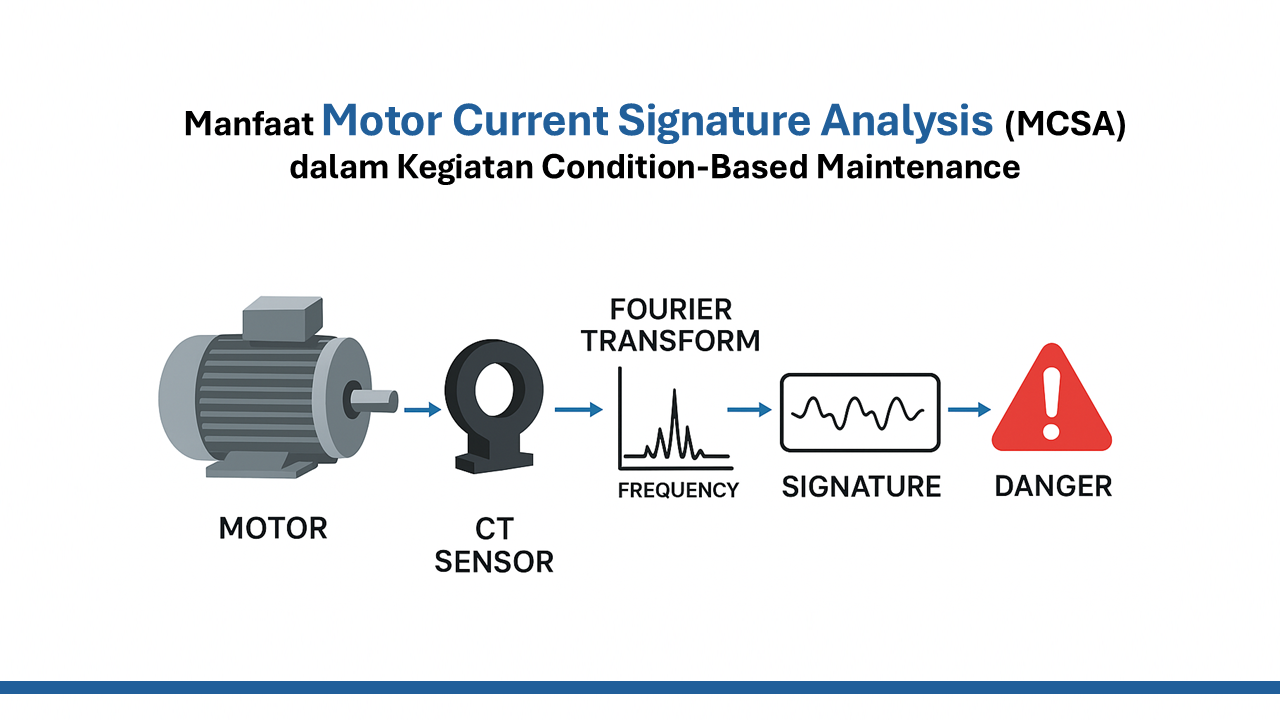
Electric motors are at the heart of various industrial processes. From pumps and fans to conveyors and compressors, motor reliability is crucial for operational continuity. Motor failure not only causes downtime but also impacts safety, production quality, and operational costs. In this context, Motor Current Signature Analysis (MCSA) is a strategic solution for continuously improving motor reliability.
Motor Reliability and Challenges in Industry
Motor reliability is defined as the ability of a motor to operate reliably according to its intended function over a specified period. The main challenges in maintaining motor reliability include:
- Slowly developing, undetected failures
- Limited physical access to the motor
- Variation in load and operating conditions
- Reliance on reactive or time-based inspections
Without proper monitoring methods, potential failures are often only discovered when the motor is already in critical condition.
The Role of MCSA in Improving Reliability
Motor Current Signature Analysis utilizes the motor's electrical current as the primary source of information to assess the health of the motor and the load. Because current is always available during motor operation, MCSA enables continuous, non-intrusive monitoring of motor condition.
With MCSA, potential faults can be identified long before they impact operations.
Early Detection as the Key to Reliability
One of the most important factors in improving reliability is early failure detection. MCSA can detect various types of faults at an early stage, including:
- Broken rotor bars
- Stator and winding faults
- Rotor imbalance
- Bearing problems affecting torque
- Load and process instability
This early detection gives the maintenance team sufficient time to plan corrective actions in a controlled manner.
Motor Monitoring Without Disrupting Operations
Unlike methods that require direct sensor installation on the motor, MCSA is performed from the electrical panel. This offers several important advantages:
- No need to stop the motor
- Safe for hazardous areas
- Suitable for motors in difficult to access
- Minimal risk to occupational safety
This ease of implementation makes MCSA ideal for critical motors that operate 24/7.
Trend Analysis to Maintain Reliability
Reliability cannot be maintained with just one measurement. MCSA enables the analysis of motor current trends over time to:
- Monitor degradation rates
- Assess failure severity
- Identify changes in operating conditions
With a trend-based approach, maintenance decisions become more accurate and less reactive.
MCSA in a Predictive Maintenance Strategy
Within a predictive maintenance framework, MCSA serves as:
- An electrically based condition monitoring tool
- An early warning system for motor failures
- A critical data source for data-driven maintenance
Integrating MCSA with a CMMS (condition monitoring system) ensures that analysis results are actively used in decision-making.
True Impact on Reliability and Operations
Consistent implementation of MCSA delivers tangible impacts, including:
- Reduced frequency of motor failures
- Reduced unplanned downtime
- Increased availability and MTBF
- Optimized maintenance schedules
- Savings on maintenance and production costs
Motors become not only more reliable, but also more efficient in the long term.
Synergy with Other Analysis Methods
To achieve maximum reliability, MCSA should be combined with:
- Vibration Analysis
- Thermography
- Oil Analysis
- Process Data
This combination provides a comprehensive understanding of the condition of the motor and the driven system.
Motor Current Signature Analysis (MCSA) is an effective and strategic tool for improving electric motor reliability. With its early detection capabilities, non-intrusive monitoring, and trend-based analysis, MCSA helps industries shift from a reactive approach to reliable, efficient, and data-driven maintenance.
In industrial environments demanding high reliability, MCSA is no longer just an optional extra, but a critical component of a modern asset management strategy.