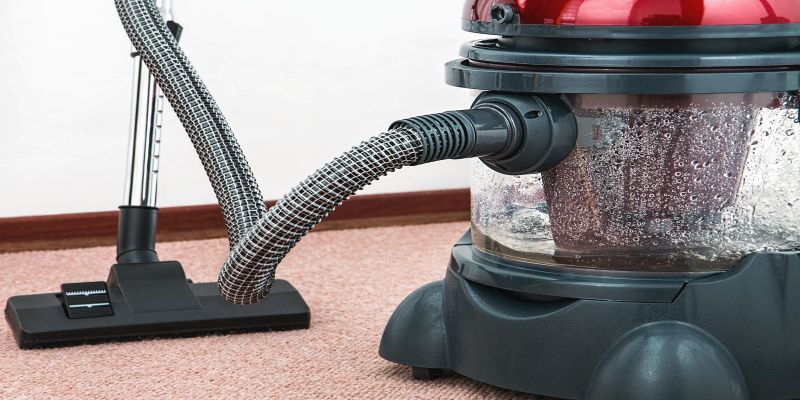
At first glance, how a vacuum cleaner works looks easy. Just vacuum and dirt on the floor, collect it inside, then clean it when the vacuum is complete. Not only at home, how to use a vacuum cleaner is also very widely used for cleaning industrial areas, for example hospitals, airports, and of course hotels. Even though it looks easy, there are many components that a vacuum cleaner needs to suck dust. Anything?
The components in a vacuum cleaner
How a vacuum cleaner works, of course, depends on the components embedded in it. This tool is commonly used to clean carpets, floors, curtains, and sofa surfaces. Its ability to vacuum and clean is very effective in helping cleaning services in various industries. A vacuum cleaner will ensure that the objects around you are cleaner and more hygienic. In general, a conventional vacuum cleaner consists of the following main components:
1. Intake port - a component on the vacuum cleaner that functions to suck dust or as a dust inlet.
2. Exhaust port - functions as the outlet of the dust sucked air that has been previously filtered by the filter.
Electric motor - the part of the vacuum cleaner that serves as the main engine of the engine to move the fan.
3. Fan - the part which is also often referred to as a fan has a function to produce a suction or vacuum air which is used to suck dust and dirt through the intake port.
4. Filter - the part that functions to filter or separate the dust from the air before the air is removed through the exhaust port.
5. Dust storage container - a useful container for storing dust or dirt from the filter.
How the vacuum cleaner works
The working principle of a vacuum cleaner is the process of suction and exhaust by applying a number of physics concepts to clean dirt effectively. The fan or fan will produce vacuum air to suck dust through the inlet, then filtered and the filtered dust collects in the storage container. Furthermore, this dust and dirt is removed from the vacuum. Technically, the way a vacuum cleaner works is as follows:
1. When the machine cable is connected to a power source, the electric current from the source will turn on the motor that is placed in the machine.
2. The driving motor is connected to a fan whose blade is tilted like a propeller on an airplane. When the motor starts moving, this fan also rotates.
3. Rotating the fan blades creates compressed air to the exhaust port. When air particles are pushed forward, the particle density and air pressure increase at the front and decrease at the rear of the fan. This drop causes objects or dust that are on the back to be inhaled due to the difference in air pressure inside the vacuum cleaner.
4. Air particles that are sucked in and mixed with dust will be channeled through the inside of the vacuum cleaner to the air filter (filter) before going to the channel outward.
5. The dust particles will be filtered on the filter and collected in the dust collection container. Meanwhile, the air continues to pass through the filter and towards the outlet.
So that's how the dust from the outside of the vacuum cleaner gets sucked in and stays in the container until you throw it out. Although nowadays there are various models of vacuum cleaner machines, this will not change the basic principle. Hopefully the information about how this vacuum cleaner works can be of use to you.