Plastic valves are increasingly used in various industries, from water treatment, food and beverage, pharmaceuticals, to heavy chemical industries. One key to successful plastic valve use is ensuring that the valve material is compatible with the chemicals it will pass through. Incorrect selection can lead to leaks, premature failure, and even safety hazards.
Here are some important tips for choosing the right plastic valve for the chemical material:
1. Identify the Type of Chemical to be Passed
The first step is to understand the basic properties of the chemical to be used:
- Is it corrosive (such as a strong acid or base)?
- Does it have a high temperature?
- Does it contain organic solvents such as alcohol, ether, or ketone?
Each chemical has a different reactivity to plastic materials.
2. Understand the Characteristics of Plastic Materials
Some common types of plastic used for valves and their characteristics:
- PVC (Polyvinyl Chloride): Resistant to many acids and bases. Not suitable for organic solvents.
- PP (Polypropylene): Stable against aggressive chemicals such as sulfuric acid and alkali, and also resistant to relatively high temperatures.
- PVDF (Polyvinylidene Fluoride): Has excellent chemical and temperature resistance. Suitable for severe applications.
- PTFE (Teflon): One of the most resistant to almost all chemicals. Ideal for extreme conditions.
3. Consult a Chemical Compatibility Chart
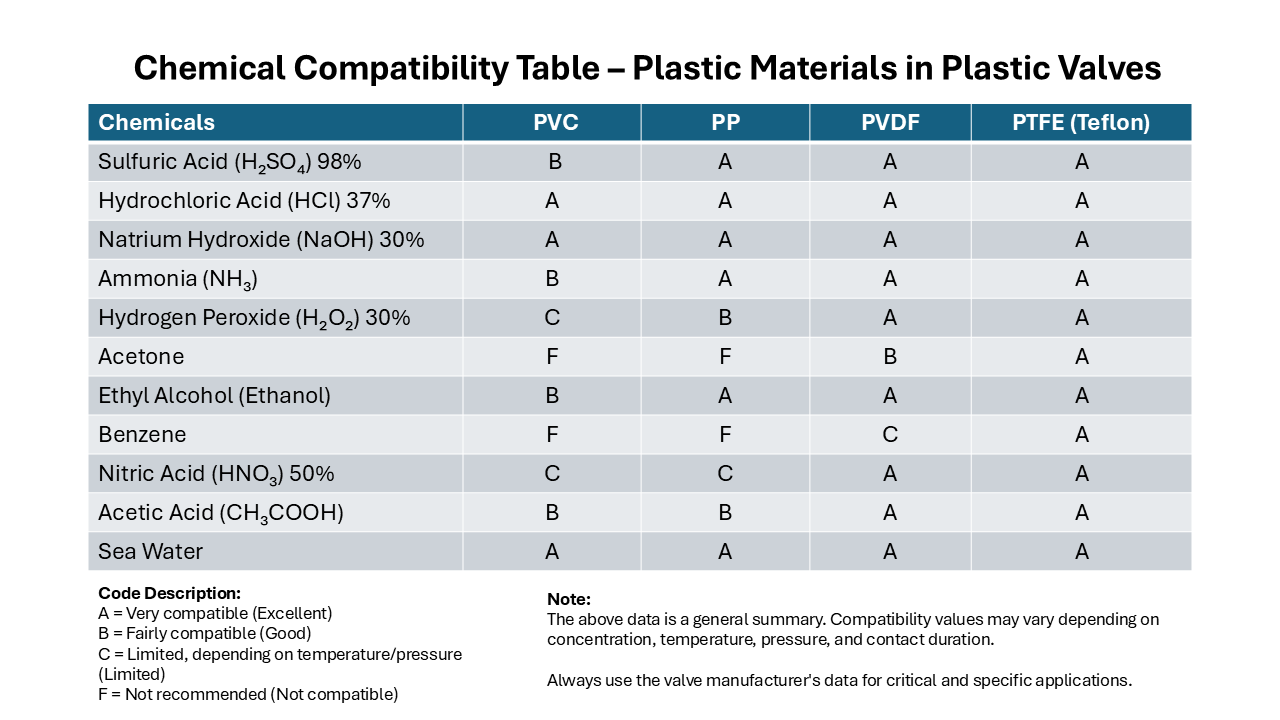
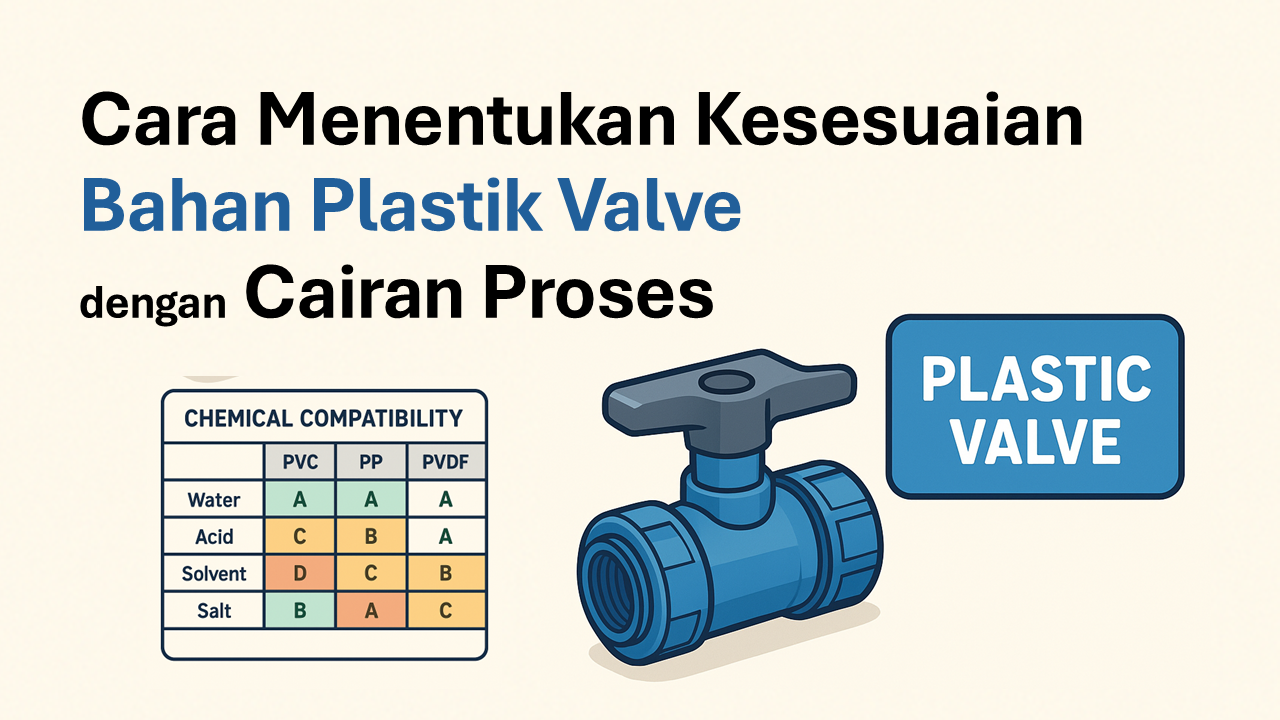
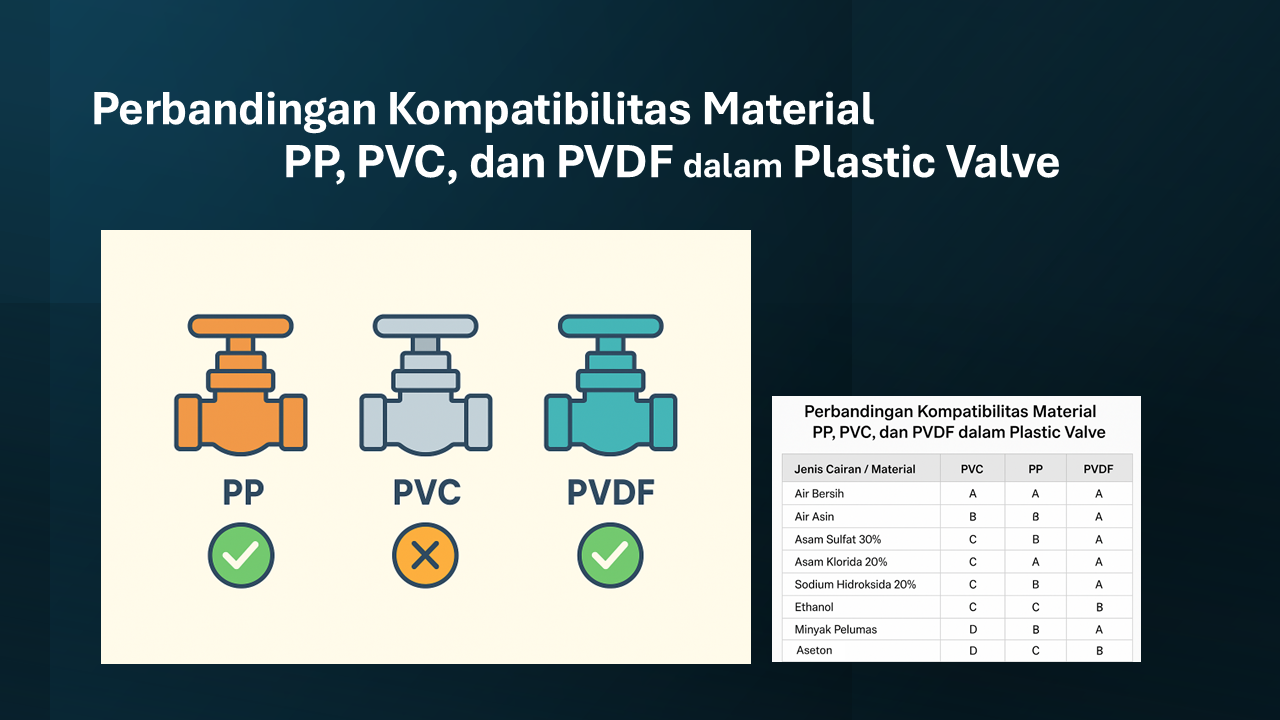
Use a chemical compatibility chart to match the type of chemical to the plastic material. These charts are generally available from valve manufacturers or technical standards agencies. Ensure the compatibility rating is at the "Excellent" or at least "Good" level.
4. Pay Attention to Operating Temperature and Pressure
Some plastic materials can withstand certain chemicals at room temperature, but can deteriorate if the temperature increases. For example, PVC tends to weaken if used above 60°C. Be sure to check the pressure vs. temperature curve of the valve you are selecting.
5. Don't Forget the Seal and Gasket
In addition to the valve body, seal and gasket materials (such as EPDM, Viton, or PTFE) must also be compatible. This component often becomes a weak point if not properly considered.
6. Use Valves from Trusted Manufacturers
Choose plastic valves from manufacturers with proven quality and complete documentation, such as material certifications, chemical resistance tests, and installation instructions.
Choosing the right plastic valve isn't just about price or shape, but rather about the material's compatibility with the chemicals and operating conditions. By considering the six tips above, you can avoid the risk of damage, increase operational efficiency, and maintain system safety.
Below is a Simple Chemical Compatibility Table for several types of plastic materials commonly used in plastic valves, with respect to several chemicals frequently encountered in industry.