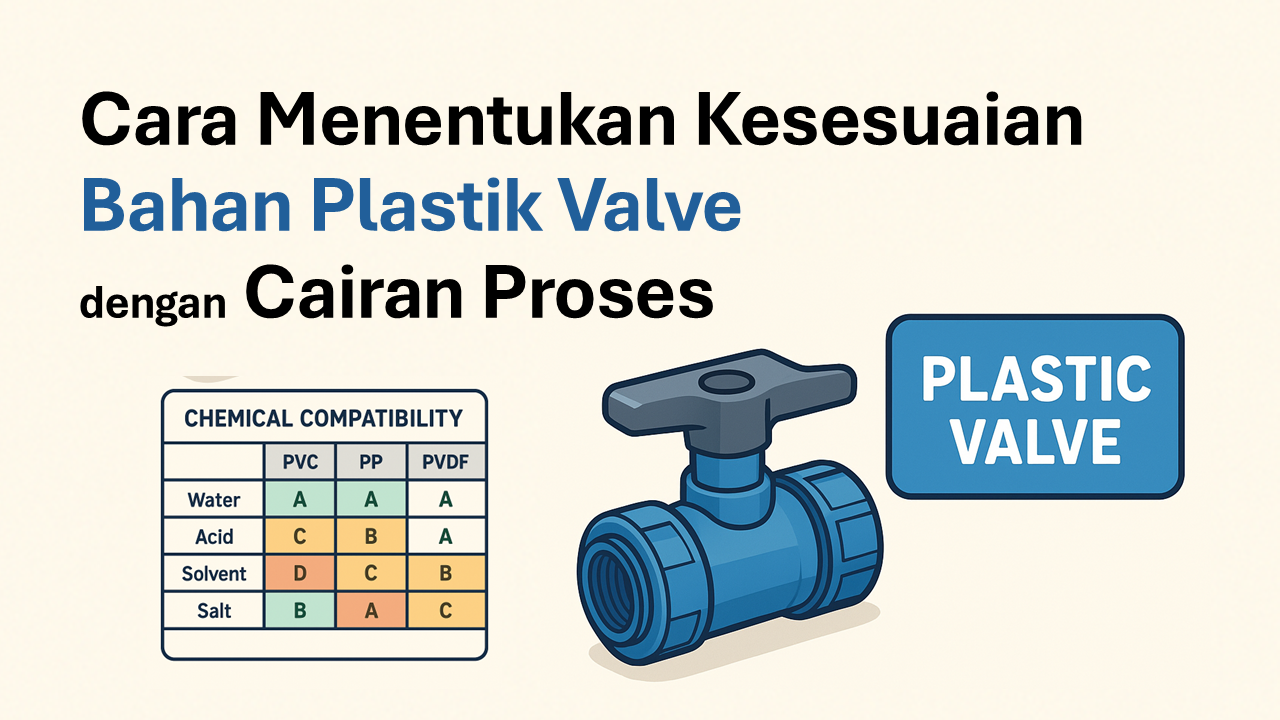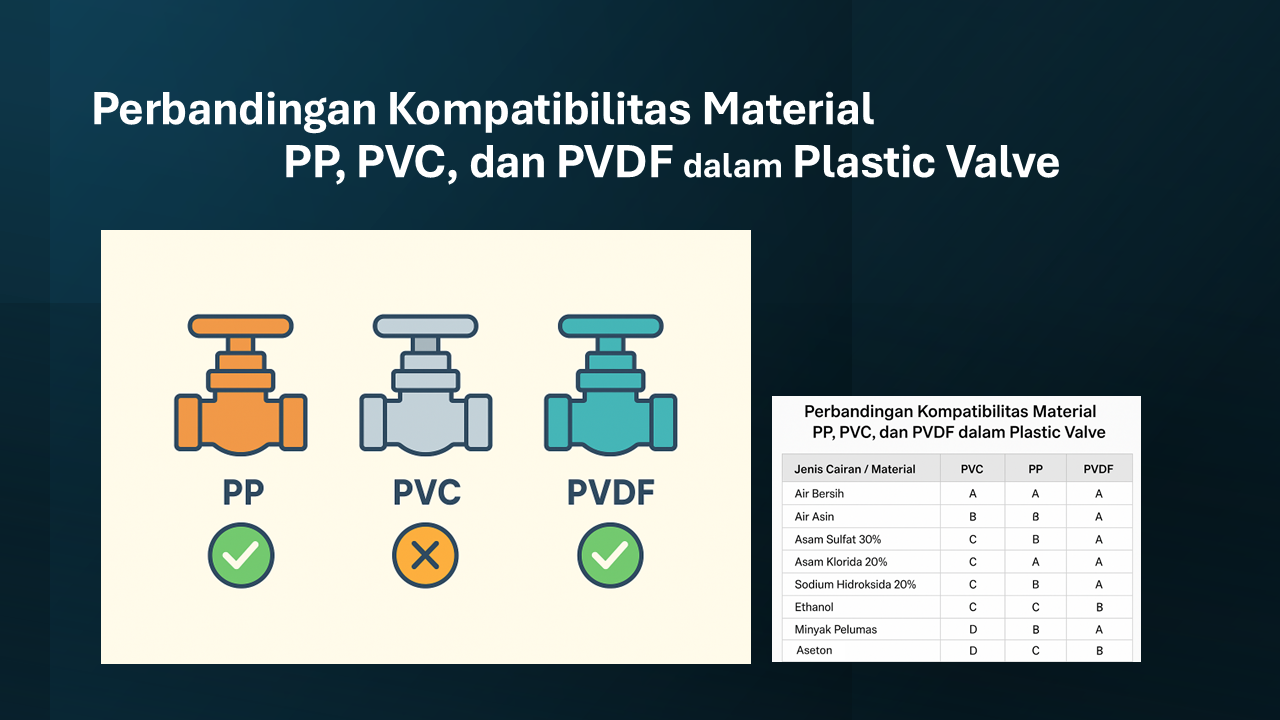
The choice of material for a plastic valve significantly determines its performance and service life. In industry, three commonly used plastic materials are PP (Polypropylene), PVC (Polyvinyl Chloride), and PVDF (Polyvinylidene Fluoride). Each has varying levels of resistance to various process fluids and operating conditions.
This article compares the compatibility of these three materials to help you choose the right one.
1. PVC (Polyvinyl Chloride)
PVC is one of the most popular materials due to its cost-effectiveness and ease of installation.
Advantages:
- Resistant to water, salt solutions, and some mild chemicals.
- Lightweight and easy to install.
- Low cost.
Disadvantages:
- Susceptible to strong organic solvents such as acetone or toluene.
- Operating temperature limited to ±60°C.
- Not suitable for highly aggressive chemicals.
2. PP (Polypropylene)
PP offers better chemical resistance than PVC, especially against acids and bases.
Advantages:
- Resistant to many chemicals, including moderate concentrations of acids and bases.
- More heat resistant (up to ±90°C) than PVC.
- Lightweight and wear-resistant.
Disadvantages:
- Less resistant to certain organic solvents.
- Strength can be reduced at very low temperatures.
3. PVDF (Polyvinylidene Fluoride)
PVDF is a premium material used for heavy-duty chemical and high-temperature applications.
Advantages:
- Highly resistant to almost all chemicals, including concentrated acids, strong bases, and aggressive solvents.
- Can be used at temperatures up to ±120°C.
- Resistant to UV radiation and outdoor environments.
Disadvantages:
- More expensive than PVC and PP.
- Heavier than PP.
4. Compatibility Comparison Table
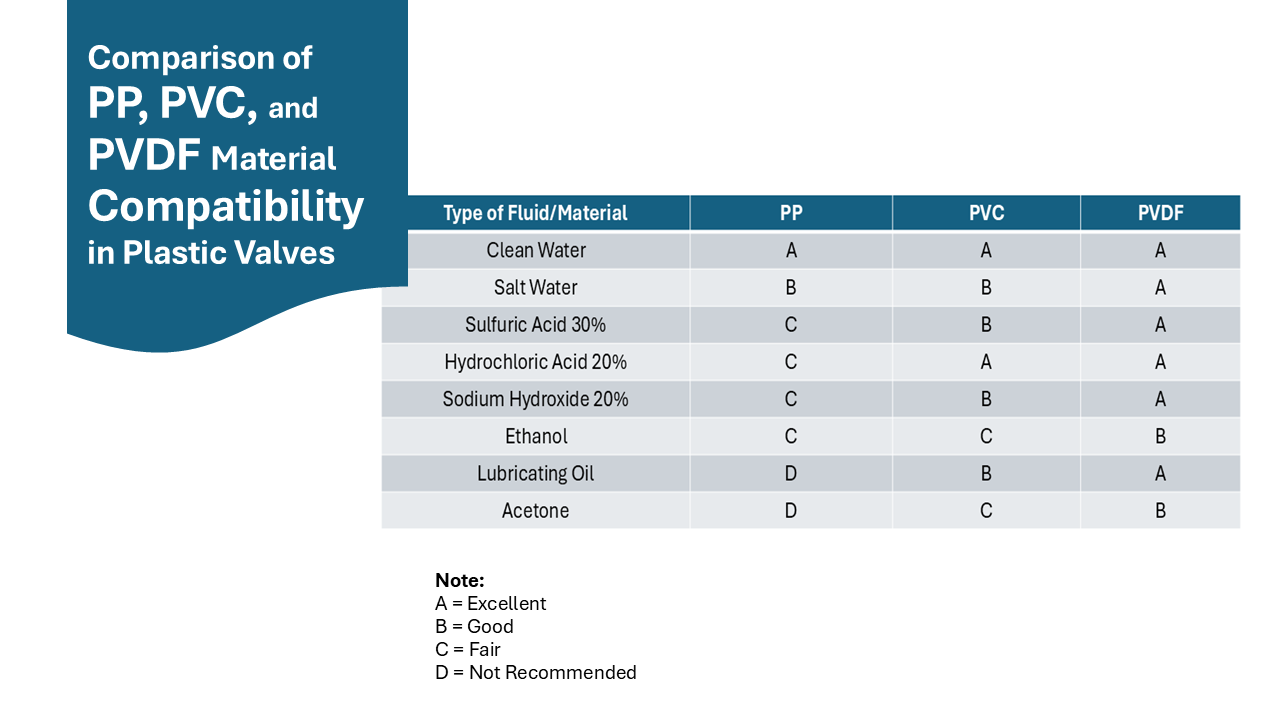
Conclusion
PVC is suitable for neutral or light fluids at low temperatures, especially if cost is a major consideration.
PP is a middle ground choice due to its better chemical resistance and slightly higher temperature tolerance.
PVDF is the best choice for applications with aggressive chemicals and high temperatures, although it is more expensive.
By understanding the characteristics of each material, you can choose the plastic valve that best suits your process needs and work environment.