In industry, selecting the right valve is crucial to ensuring the smooth and safe flow of production processes. One key factor is the suitability of the valve plastic material for the type of fluid that will flow through it. Incorrect selection can lead to valve damage, leaks, and even compromised product quality.
Here are the steps to determine the suitability of valve plastic materials for process fluids:
1. Identify the Type of Process Fluid
The first step is to determine the characteristics of the fluid to be transported. Important information to consider includes:
Type of fluid: water, oil, chemicals, solvents, acids, or bases. Chemical concentration: for example, 30% sulfuric acid has a different corrosive level than 98%.
Solid particle content: whether the fluid contains sand, mud, or powder.
2. Consider Operating Temperature and Pressure
Plastic materials have specific temperature and pressure limits. For example:
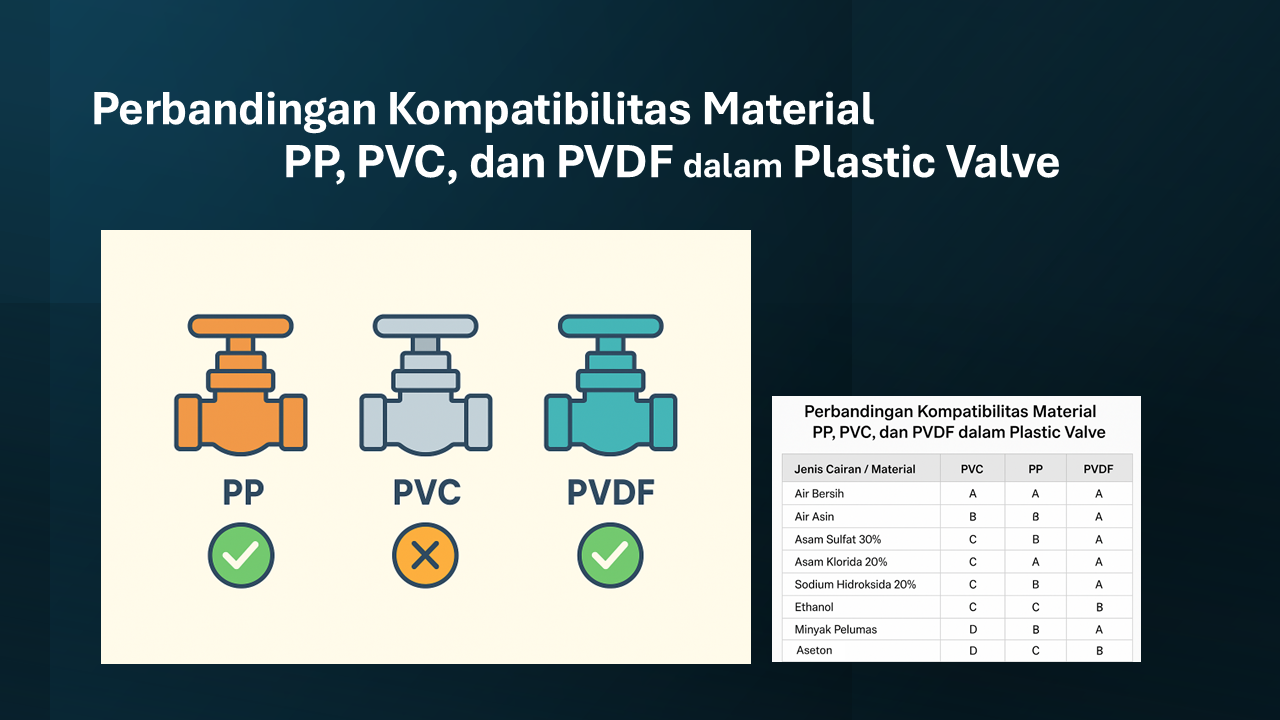
PVC (Polyvinyl Chloride) is generally used up to temperatures of ±60°C.
PP (Polypropylene) can withstand temperatures up to ±90°C.
PVDF (Polyvinylidene Fluoride) is capable of operating at high temperatures and is resistant to many aggressive chemicals.
If the temperature and pressure exceed specifications, the plastic can soften, crack, or lose its mechanical strength.
3. Use a Chemical Compatibility Chart
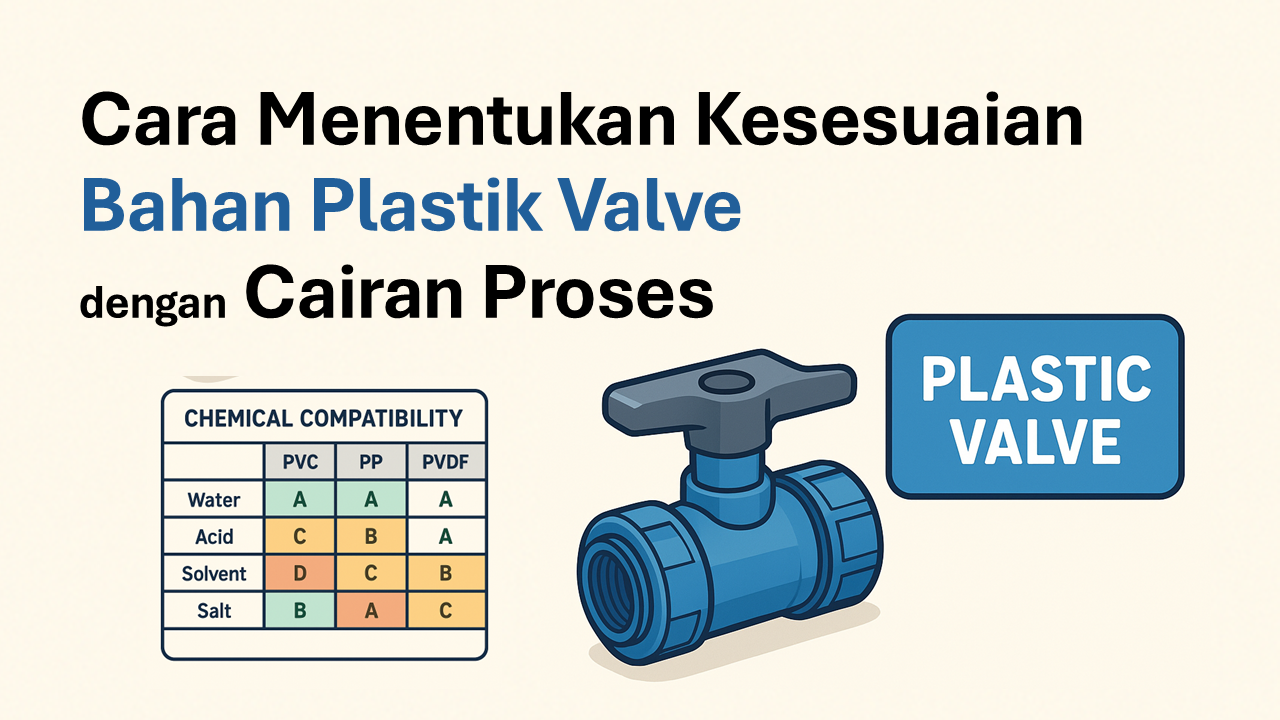
Valve manufacturers usually provide a Chemical Compatibility Chart that indicates the material's resistance to various fluids. In this table, compatibility is usually indicated by:
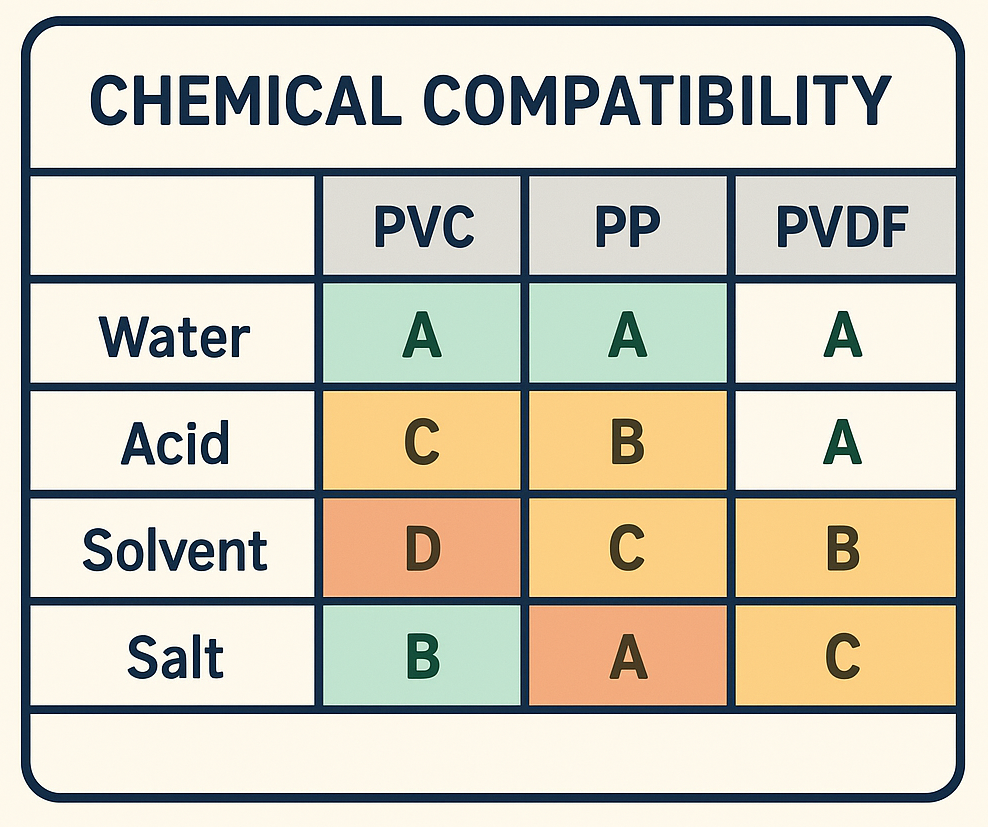
A (Excellent) → Very compatible, safe for long-term use.
B (Good) → Fairly safe, but there is potential for degradation after prolonged use.
C (Fair) → Not recommended for continuous use.
D (Not Recommended) → Not suitable at all.
4. Consider Lifespan and Cost
Sometimes, plastic materials that are highly resistant to certain fluids are more expensive. Therefore, choose a durable but economical material based on your needs. For example, for neutral fluids at low temperatures, PVC can be more efficient than the more expensive PVDF.
5. Consult with the Manufacturer or an Expert
If in doubt, it is highly recommended to consult with the valve manufacturer or an experienced technician. They can provide recommendations based on laboratory test data and field experience.
Determining the suitability of a valve plastic material for a process fluid requires an understanding of the fluid's properties, operating conditions, and material durability. With proper analysis, you can avoid equipment damage, save maintenance costs, and ensure smooth production processes.