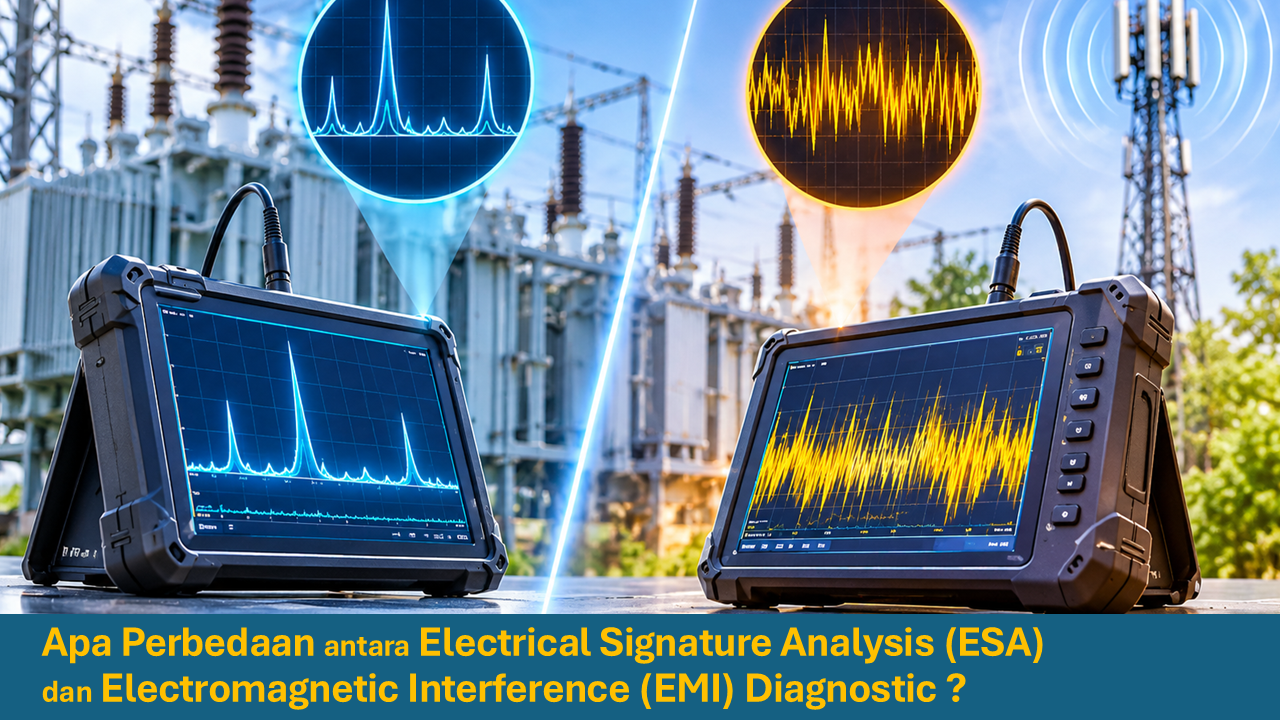
The difference between Electrical Signature Analysis (ESA) and Electromagnetic Interference (EMI) diagnostics lies in their measurement principles, the parameters analyzed, and the types of faults they are designed to detect. Both can be used for condition monitoring of industrial equipment—particularly electric motors—but they employ different diagnostic approaches.
In the context of predictive maintenance, both methods help identify signs of faults before they escalate into failures that cause unplanned downtime.
1. Electrical Signature Analysis (ESA)
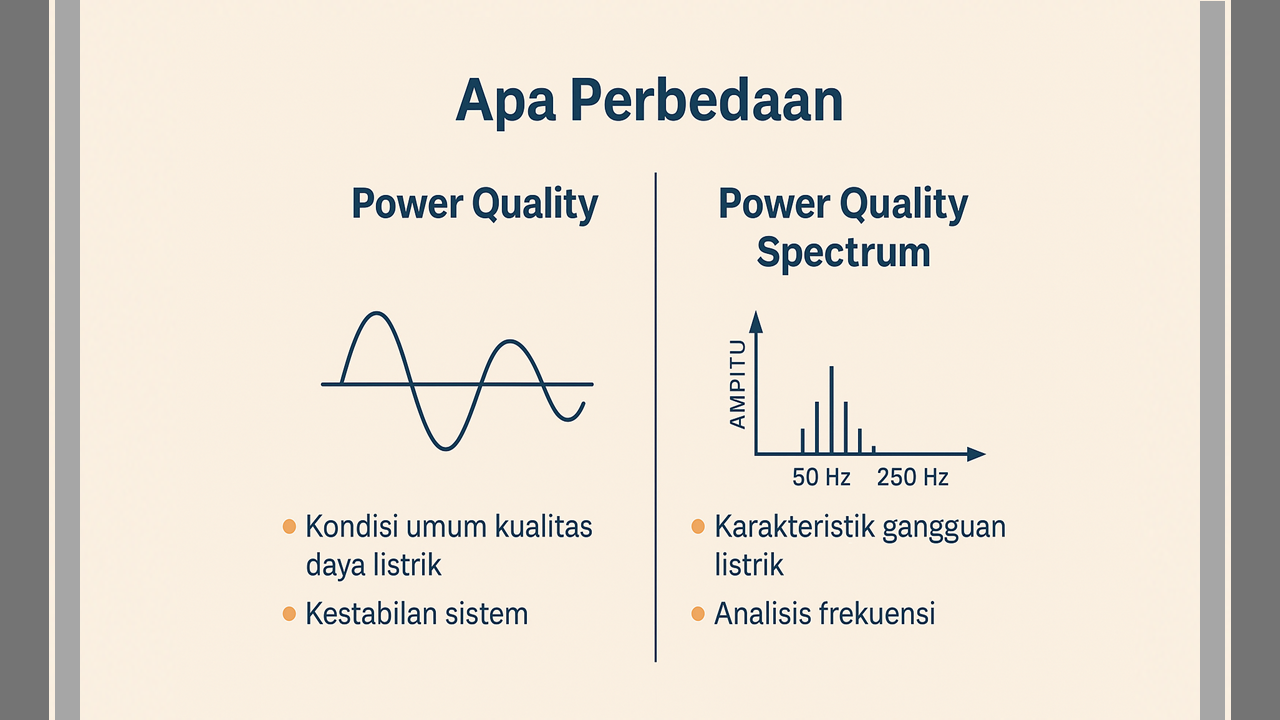
Electrical Signature Analysis (ESA) is a diagnostic method that analyzes the characteristics of electrical signals—such as voltage and current—to evaluate the condition of an electric motor and the equipment it drives.
In electric motors, voltage and current signals contain information regarding electrical health, load characteristics, and the mechanical response of the system. Changes in signal patterns or the emergence of specific frequency components can indicate the presence of a fault.
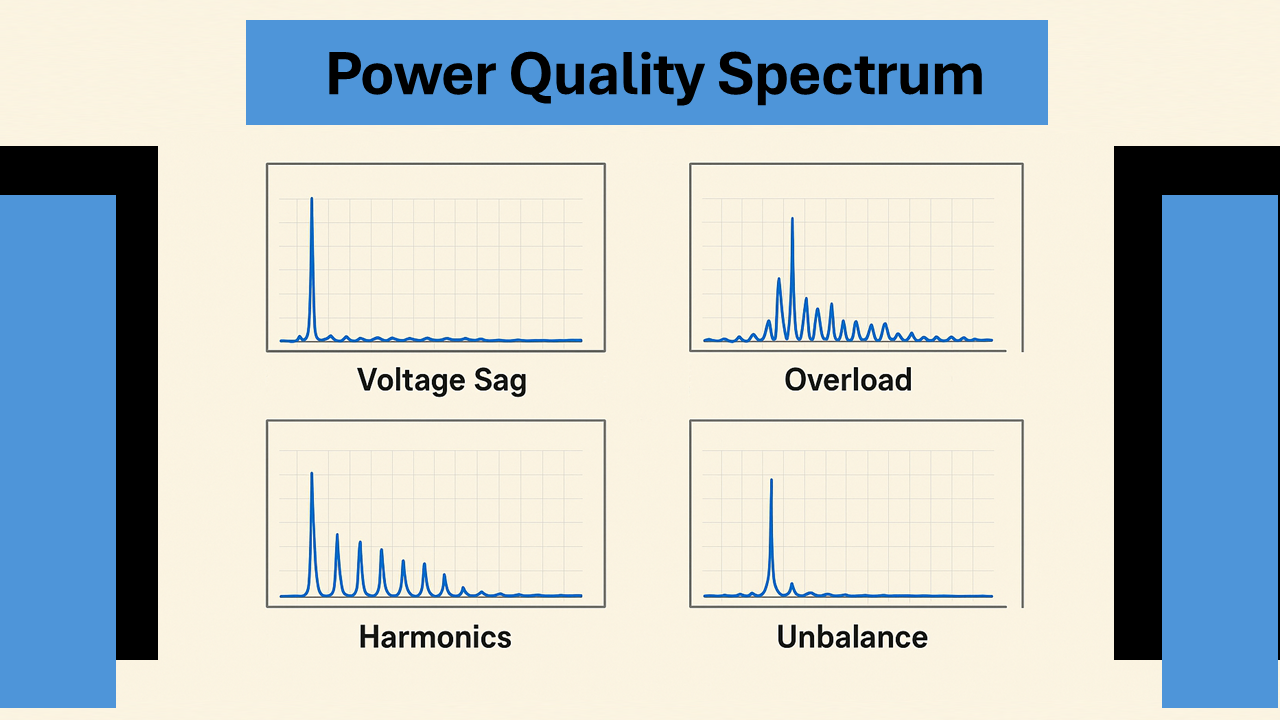
ESA typically utilizes frequency-domain analysis, including the Fast Fourier Transform (FFT), to identify patterns associated with the condition of the equipment.
Examples of faults that can be identified via ESA include:
• Voltage or current imbalances.
• Indications of rotor damage in induction motors, such as broken rotor bars.
• Air-gap eccentricity.
• Mechanical load issues, such as signs of bearing or gearbox faults under certain conditions.
• Load variations that may indicate problems with the driven machinery.
The ability to detect a specific type of fault depends on the machine's characteristics, operating conditions, measurement quality, and the analytical methods employed.
Advantages of ESA: Measurements can be taken from the electrical side, which, in many applications, eliminates the need to install vibration sensors directly onto the machine. However, ESA cannot automatically pinpoint every specific type of failure based on a single measurement alone.
2. Electromagnetic Interference (EMI) Diagnostic
In the context of electrical machine diagnostics, Electromagnetic Interference (EMI) diagnostic is a method that analyzes electromagnetic emissions or high-frequency signals to identify signs of faults in electrical equipment—specifically those related to arcing, corona, partial discharge, and insulation degradation.
When an abnormal discharge of electrical energy occurs—for instance, due to insulation failure or loose electrical connections—electromagnetic emissions within specific frequency ranges may be generated. These signals can be captured using specialized sensors and analysis equipment, then evaluated to detect potential faults.
Examples of faults that can be identified through EMI diagnostics include:
• Partial discharge: localized electrical discharges that may indicate the degradation of an insulation system.
• Corona discharge: electrical discharges resulting from high electric field concentrations, typically occurring in high-voltage systems.
• Arcing: electrical discharges occurring along unintended paths, often caused by loose connections or damaged conductors.
• Insulation degradation: the deterioration of insulation, which can produce specific electromagnetic emissions.
• Winding faults: certain types of damage to the windings of motors or generators can generate emission patterns that can be analyzed.
The ability to detect these faults depends on factors such as the type of equipment, the severity of the damage, the location of the emission source, the sensitivity of the sensors, and the environmental conditions during measurement.
The advantage of EMI diagnostics is that it can help detect electrical faults that might not be apparent through conventional current and voltage measurements. This technique is particularly relevant for monitoring the condition of insulation in motors and generators, especially when early detection of potential electrical damage is required.
It should be noted that the term "EMI diagnostic" is also used in the field of electromagnetic compatibility (EMC), which focuses on electromagnetic disturbances affecting electronic devices. The discussion here refers specifically to its application in the diagnostics of electrical machine conditions.
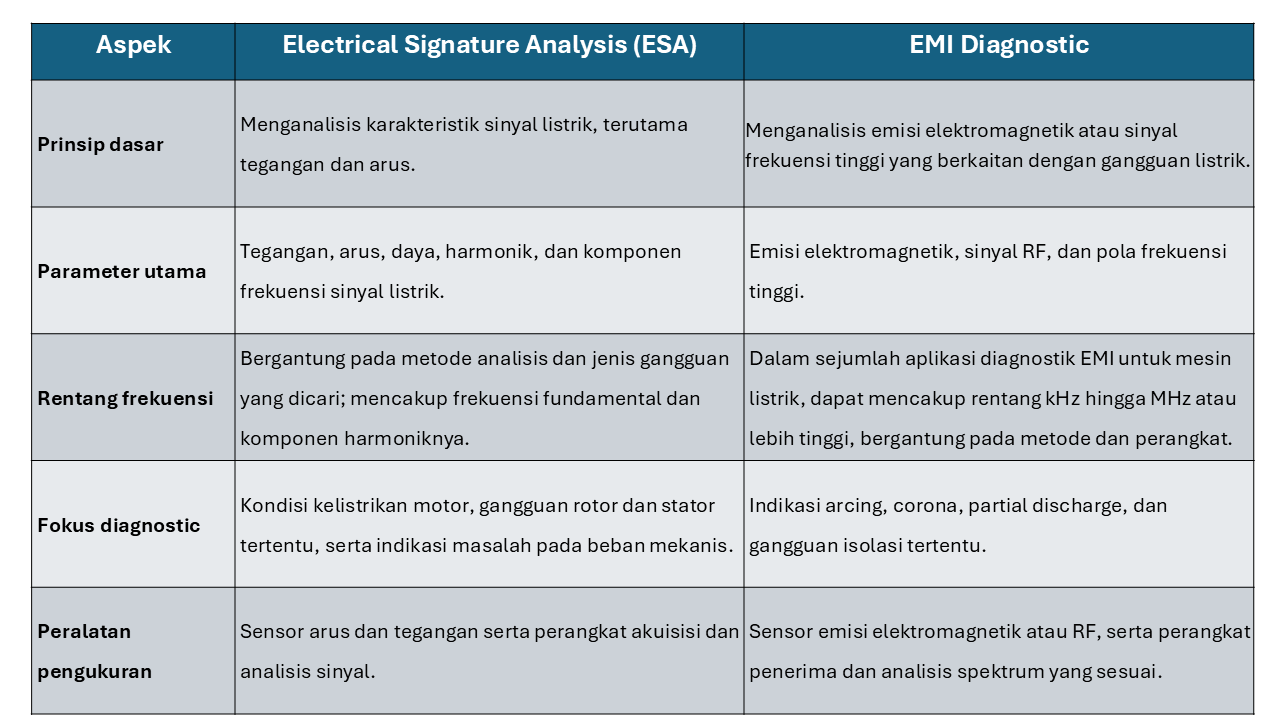
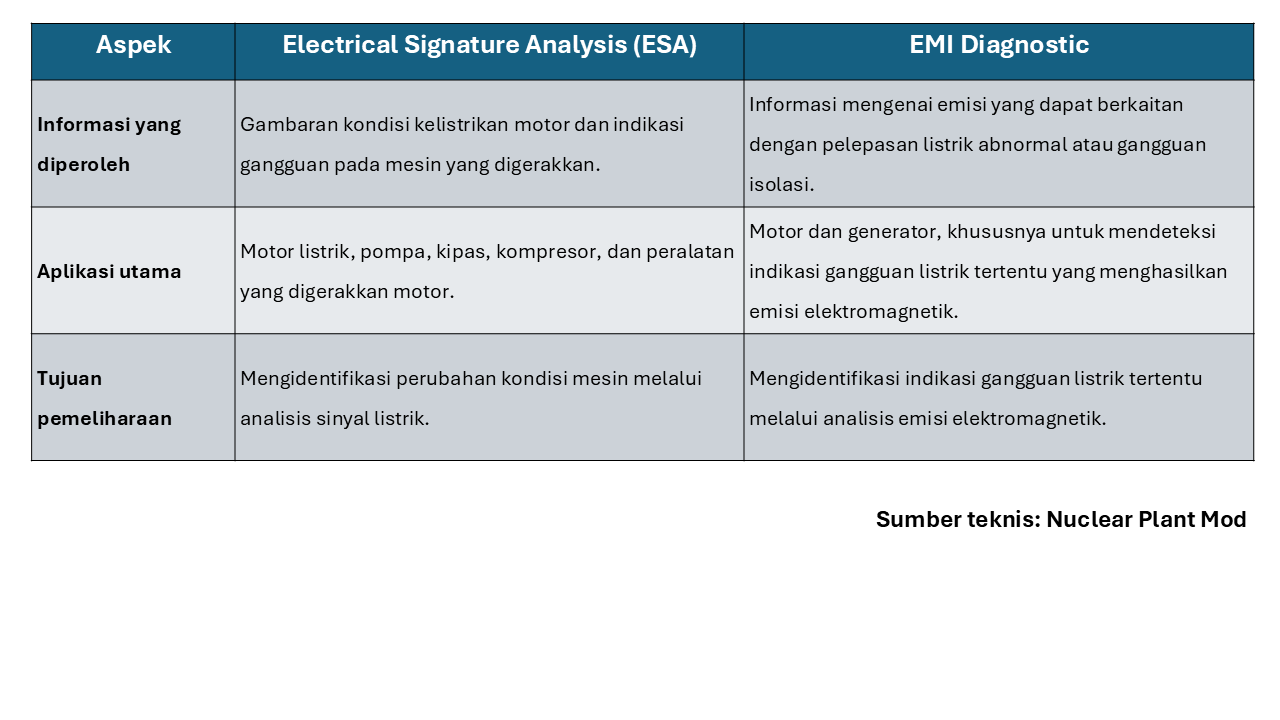
3. Comparison of ESA and EMI Diagnostics
The following are the key differences between the two in the context of industrial predictive maintenance.
4. Example of Application in Industrial Electric Motors
Consider an electric motor driving a main pump at a power generation facility or a processing plant.
The maintenance team wants to determine if the motor’s condition is deteriorating before a failure occurs that could lead to a production stoppage.
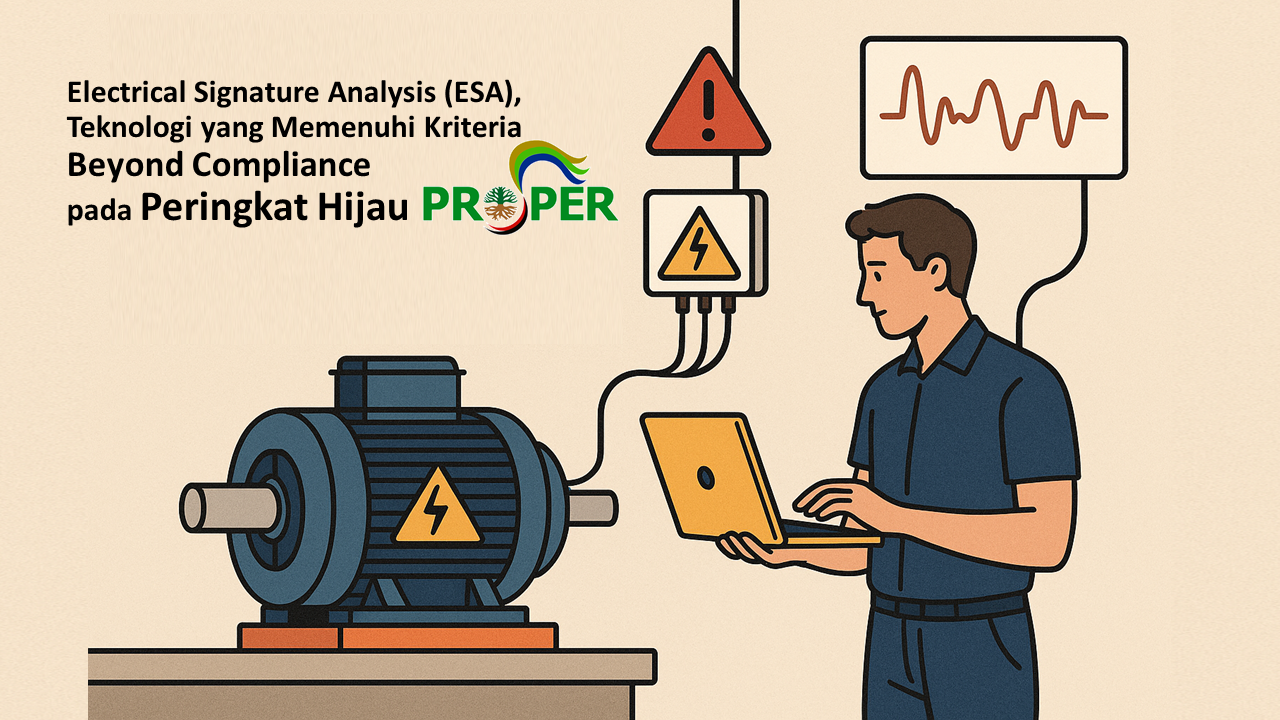
Using ESA (Electrical Signature Analysis)
A technician measures current and voltage while the motor is in operation. The analysis reveals unusual frequency components in the current spectrum, which may indicate rotor damage.
The technician then evaluates these findings—taking into account the load, rotational speed, motor characteristics, and operational conditions—to determine the necessary follow-up inspections.
ESA can also help identify potential issues within the pump system, such as load variations linked to specific hydraulic conditions. However, such indications should be verified through additional inspections if necessary.
Using EMI (Electromagnetic Interference) Diagnostics
For the same motor, a technician measures electromagnetic emissions using appropriate sensors.
If emission patterns indicating abnormal electrical discharge activity are detected, the maintenance team can conduct further investigations into the condition of the insulation, connections, or related electrical components.
Follow-up inspections may include insulation testing or other electrical diagnostic methods, depending on the type of motor and the nature of the suspected fault.
In conclusion, ESA is primarily oriented toward analyzing the condition of a machine via electrical signals, whereas EMI diagnostics focuses on electromagnetic emissions that may point to specific electrical faults.
5. Which Is Better for Predictive Maintenance?
No single method is universally superior for all conditions. The choice of technology should be based on the type of equipment, the failure modes of concern, and the objectives of the maintenance program.
ESA is worth considering when:
• The company wishes to evaluate the condition of both the motor and the load it drives.
• Early detection of rotor faults or electrical imbalances is a priority.
• The maintenance team aims to gain insight into the machine's condition by measuring electrical signals.
• The equipment is difficult to access for the direct installation of vibration sensors. EMI Diagnostic is worth considering when:
• There is a specific concern regarding the insulation condition of a motor or generator.
• The risk of partial discharge, corona, or arcing needs to be evaluated.
• A company wishes to supplement its existing electrical diagnostic methods.
• Appropriate measurement methods and interpretation procedures for the specific type of equipment are available.
To obtain a more comprehensive overview of a machine's condition, both methods can be used as complementary technologies. The results can also be integrated with vibration analysis, thermography, and insulation condition testing.
A multi-technology approach helps maintenance teams distinguish between electrical and mechanical faults, enabling them to determine more precise inspection actions.
Within condition monitoring and predictive maintenance programs, ESA and EMI Diagnostic serve distinct yet complementary functions.
ESA analyzes electrical signals to derive information about the condition of a motor and the machinery it drives. Meanwhile, EMI Diagnostic analyzes electromagnetic emissions to identify specific electrical faults, including those related to abnormal electrical discharges and insulation degradation.
ESA helps answer the question, "What do the electrical signals reveal about the machine's condition?" whereas EMI Diagnostic helps answer, "Are there electromagnetic emissions that indicate specific electrical faults?"
By understanding the differences between the two, companies can select the most appropriate diagnostic technology to enhance asset reliability, reduce the risk of failure, and support a more proactive maintenance strategy.
Technical References
For further in-depth study, please refer to the following resources:
1. Electric Power Research Institute (EPRI) — Improve Online Equipment Condition Monitoring Using Electrical Signature Analysis
2. AMS — Electrical Signature Analysis for Motor and Generator Diagnostics
3. EPRI — EMI Diagnostics