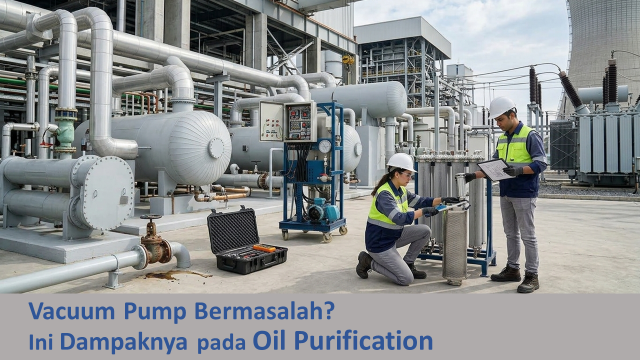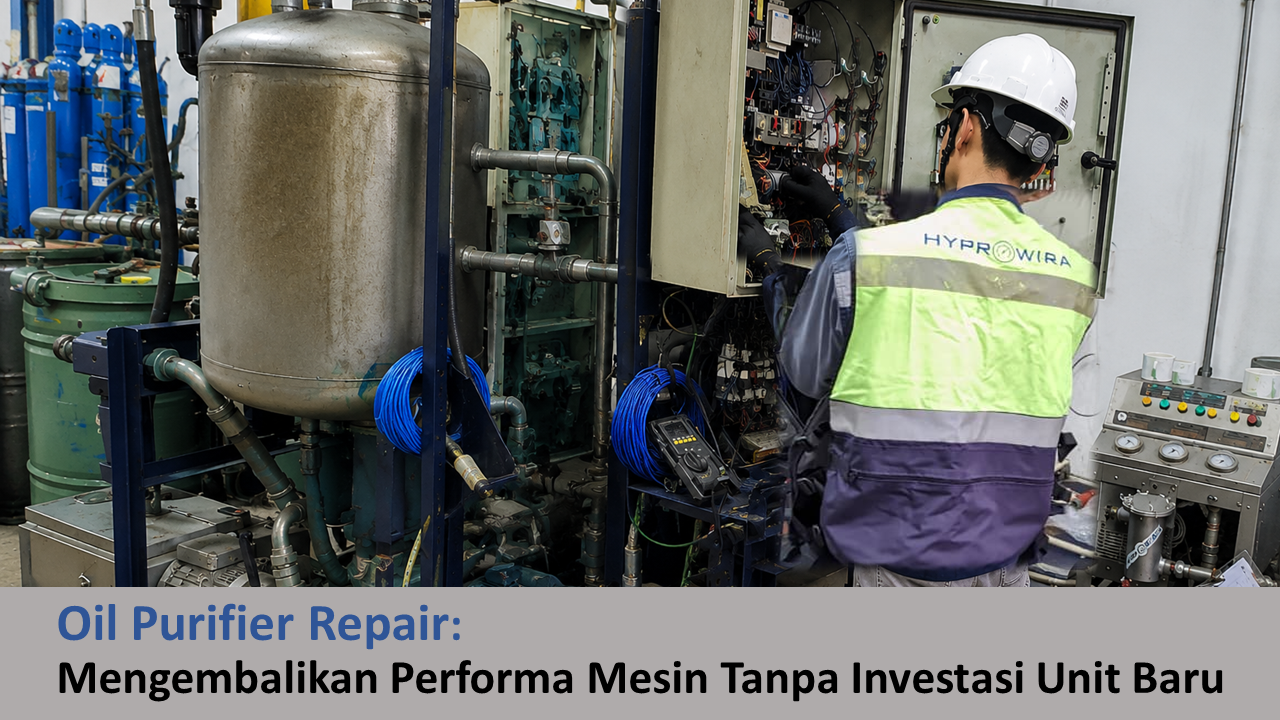
In the electricity industry, oil purifiers play a crucial role in maintaining the quality of transformer and turbine oil to meet the operational needs of power plants. This equipment helps reduce various contaminants such as particles, moisture, air, and dissolved gases through filtration, heating, vacuum dehydration, and degassing. Because they function as part of maintenance activities, oil purifiers also require regular maintenance and inspection. When performance declines or damage occurs, the entire unit does not necessarily need to be replaced. Oil purifier repair can be a solution to restore equipment function and performance to a more efficient level.
Why Can Oil Purifier Performance Decrease?
Like other industrial equipment, oil purifiers operate with various mechanical, electrical, and vacuum system components that experience wear and tear during operation. Some common problems include decreased oil flow capacity, suboptimal vacuum, heater malfunction, oil pump problems, clogged filters, system leaks, and even disruptions to the control panel and instrumentation.
Problems with any of these components can impact the entire purification process. For example, a vacuum system that is unable to achieve the required pressure can prevent the dehydration and degassing processes from proceeding optimally. Similarly, a saturated filter or a degraded oil pump can reduce process capacity and lengthen purification times.
Therefore, when an oil purifier begins to show signs of declining performance, the first important step is to diagnose and inspect the equipment, rather than immediately replacing the entire unit.
Oil Purifier Repair: Repair or Replace?
The decision between repairing or replacing an oil purifier requires considering the actual condition of the equipment, the extent of the damage, the age of the unit, the availability of spare parts, and the long-term costs and benefits.
In certain circumstances, damage occurs only to certain components and can be repaired or replaced. The vacuum pump, oil pump, heater, filter element, valve, hose, sensor, pressure/vacuum gauge, control panel, and several other components may be inspected during the repair process.
Repairing the affected component can be a more economical alternative than investing in a new unit, especially if the main system and structure of the oil purifier are still in good condition. In addition to reducing capital expenditure, repairs can also help extend the service life of equipment and reduce the time required to procure replacement units.
However, repairs don't simply involve replacing damaged components. A good process must begin with troubleshooting, inspection, root cause identification, repairs, and functional testing to ensure the oil purifier can return to normal operation.
Components That Need to Be Inspected
In oil purifier repair work, inspections should cover several key areas:
1. Vacuum System
Inspections are conducted to ensure the vacuum system is capable of meeting the conditions required for the dehydration and degassing processes. The vacuum pump, valves, hoses, seals, and system connections should be inspected to identify possible leaks or decreased performance.
2. Oil Pump and Circulation System
The oil pump plays a crucial role in ensuring transformer oil can circulate through the purification system. A decrease in pressure or flow can indicate a problem with the pump or circulation system.
3. Heating System
Temperature is a critical parameter in the oil purification process. The heater and temperature control system must be ensured to operate normally and safely.
4. Filtration System
The filter functions to capture particulate contaminants. The condition of the filter housing, filter element, differential pressure, and sealing system must be checked to ensure proper filtration.
5. Electrical & Control System
The control panel, wiring, sensors, switches, indicators, and protection system also need to be checked. Electrical and control system failures can cause the oil purifier to malfunction or trip.
Proper Repair Supports Transformer and Turbine Maintenance
Oil purifiers are supporting equipment in transformer and turbine maintenance programs, so their reliability is also important. A ready-to-use oil purifier allows oil purification work to be carried out when needed based on the condition of the transformer and turbine oil.
However, the decision to perform purification should be based on test results and the transformer's condition. Parameters such as Breakdown Voltage (BDV), water content, acidity, interfacial tension, resistivity, and others help determine the oil's condition and the need for treatment. For a more comprehensive assessment of the transformer's condition, Dissolved Gas Analysis (DGA) can also be used to identify signs of faults related to the transformer's internal state.
Regarding turbine oil, the decision to purify is based on measurements of the oil's water content. If there is a trend of rising water content, operating the oil purifier serves as a proactive measure.
Thus, oil purifier repair does not stand in isolation. Equipment repair, oil testing, purification, and condition assessment of transformers and turbines can form part of a mutually supportive maintenance strategy.
Restoring Performance, Optimizing Costs
Replacing an oil purifier with a new unit is certainly an option when the equipment is beyond repair. However, in many cases, proper repair offers an alternative to restore equipment functionality without the need to invest in a new unit.
The key lies in conducting a thorough inspection and identifying the specific components or systems that truly require repair. With this approach, companies can optimize maintenance costs, extend equipment service life, and ensure the oil purifier remains ready to support transformer and turbine maintenance needs.
PT Hyprowira Adhitama provides solutions for oil purifier repair and upgrades, backed by extensive experience in testing and condition monitoring. By adopting an equipment-condition-based approach, the repair process aims not only to restore the oil purifier to operation but also to ensure its performance meets operational requirements.