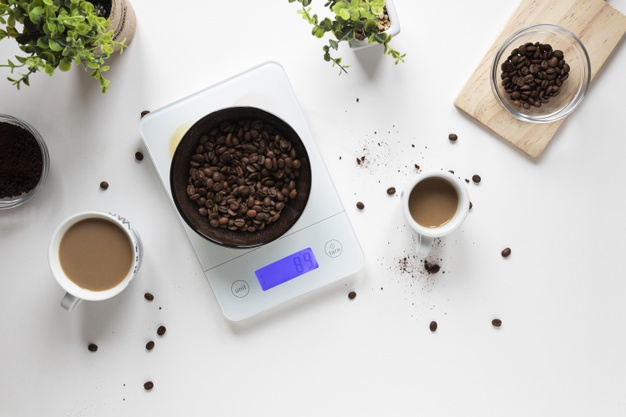
Knowing the parts of an analytical balance is one of the important steps that must be taken before using such an instrument. By understanding each part of an analytical balance, you can use them appropriately. If the instrument is used properly, the instrument's useful life will be longer.
So, to find out the parts of an analytical balance and their uses for each, you can learn them through the following reviews.
Parts of the Analytical Balance
Analytical balances on the market today are generally classified into two different types: digital analytical balances and analog analytic balances. This article will discuss the sections on a digital analytical balance. Here's the explanation.
1. Balance plate (pan)
used as a container to put the sample of material to be measured in mass. To clean this area, you can use a special cleaning brush or a clean microfiber cloth.
2. Weights
serves as a tool to calibrate analytical scales. The mass of the material being the weights is precisely made so that the balance calibration remains accurate.
3. Water pass
a tool used to determine the position of the balance plate. Waterpass is also used to re-position the balance plate,
4.Power button (on / off button)
used to turn the balance on or off. After pressing the power button to turn on the balance, the instrument will usually be left idle for approximately 10-15 minutes before using it to produce a more accurate measurement.
5. 'Re-zero' or 'Tare' button
used to adjust the balance to return to a neutral position (zero). We recommend that you use this button not too often so that the balance can still produce accurate measurements.
6. 'Mode' button
used to set the conversion system used when measuring. By using the 'Mode' button, you can specify the conversion system as needed.
Advantages of Analytical Balance
What are the advantages of analytical balances over other mass measurement instruments? Analytical balances are generally used to measure the mass of objects with a high degree of precision (sub-milligram range). This means that the analytical balance function is able to display more detailed measurement results up to sub-milligram units.
Usually, analytical balances are used to measure the mass of materials or objects that are solid. However, it is also possible if this instrument is used to measure materials or objects in the form of liquids. Apart from having high accuracy, the analytical balance is also strong. Analytical balance can be used in free space without having to fear the sample is exposed to air flow. This is because the analytical balance has a special cover that protects the sample from airflow. Not only that, the analytical balance is also equipped with an internal calibration system so that the balance can be identified and adjusted easily.
Also read: How to Use the Analytical Balance Correctly
Level of Accuracy Analytical Balance
As mentioned in the previous point, analytical balances, especially digital types, have a high degree of accuracy. What is the level of accuracy of the analytical balance? This instrument is capable of displaying the measurement results of up to four decimal places. Most digital analytical balances on the market are capable of detecting the mass of objects in the range of 100 grams to approximately 0.0001 grams.
Some Points to Pay Attention to
When using a digital analytical balance, there are a number of things that you should pay attention to so that the accurate measurement results of the instrument have a long service life. Here's the explanation.
1. Before using the balance, adjust the balance balance by performing a calibration. Calibration can be done by turning the screw on the back of the balance, adjusting the balance position so that it is parallel to the water pass.
2. Place the analytical balance in a separate room. Avoid putting the balance in a location that is used by people passing by because it can interfere with the process of measuring the balance. Place the balance in a stable location such as the end of the room or in a room that only has one doorway.
3. Do not place the balance in a damp room and exposed to direct sunlight. Humid air will affect the measurement results and cause corrosion. Meanwhile, sunlight can cause instrument expansion.
By knowing the parts of the analytical balance, it is hoped that you will be able to use the instrument appropriately. Still haven't found a suitable analytical balance? We recommend Mettler Toledo ME-T analytical balance. Immediately get this high accuracy instrument only at Hyprowira, which sells analytical balances and other laboratory instruments. Hopefully this explanation of the parts of the analytical balance will be helpful.
Also read: Types of High Accuracy Scales