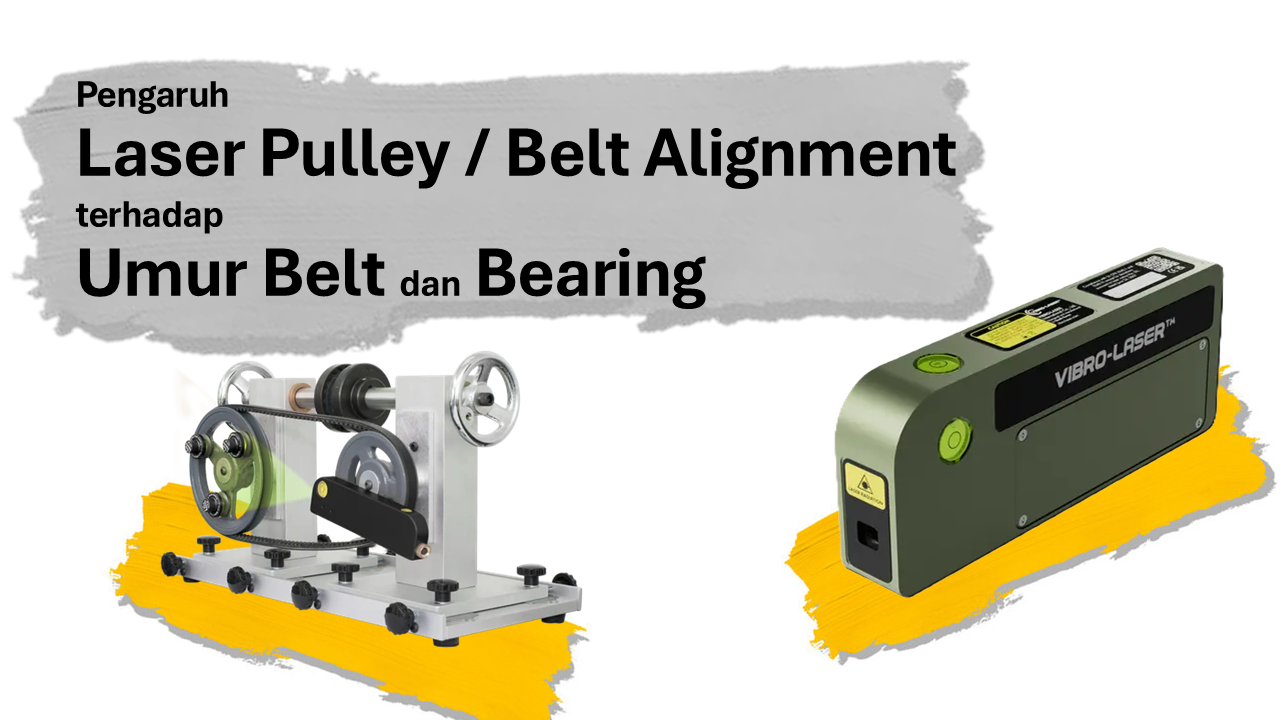
Pulley or belt alignment is a crucial component in power transmission systems, especially in industrial machines that use belts. Improper alignment can cause component damage, excessive vibration, reduced efficiency, and even machine downtime. Two common methods are manual pulley or belt alignment and laser alignment. So, how do the results of these two methods compare?
1. Accuracy Level
Manual
The manual method uses simple tools such as a straight edge or string. Accuracy is highly dependent on the operator's experience and the physical condition of the equipment. Typically, the tolerance for deviation is quite high.
Laser
With a laser beam, alignment can be performed with very high precision. Deviations as small as 0.1 mm can be easily detected. Laser alignment also reduces human error.
Winner: Laser – More accurate and consistent.
2. Processing Time
Manual
The process is slower because it requires repeated checks and manual measurements, especially if there are visual or lighting issues.
Laser
Measurement results are displayed in real time. Some laser tools even provide live correction instructions, so the alignment process can be completed in much less time.
Winner: Laser – Time-saving and efficient.
3. Ease of Use
Manual
Requires skill and experience. New operators tend to need more training to produce good results.
Laser
Generally equipped with a digital display or visual indicators, making it easier for even novice technicians to understand.
Winner: Laser – More user-friendly.
4. Cost
Manual
Initial costs are very low because they only require simple tools. Suitable for small workshops or industries with limited budgets.
Laser
Requires a relatively high initial investment, especially for purchasing quality tools. However, operational and maintenance costs tend to be lower in the long run due to fewer errors and repairs.
Winner: Depends on Needs – Manual is cheaper, but laser is more efficient in the long run.
5. Consistency of Results
Manual
Heavily dependent on individual skill, results can vary between technicians.
Laser
Provides consistent and replicable results, even by different technicians.
Winner: Laser – More consistent and standardizable.
Conclusion
Aspects Manual Laser
Accuracy Moderate Very high
Turnaround Time Long Fast
Ease of Use Operator Dependent Easy
Initial Cost Low High
Consistency Variable Stable
If your needs are occasional and your budget is limited, manual methods are still reliable. However, for industrial operations that require speed, accuracy, and efficiency, laser pulley or belt alignment is a modern solution worth considering.